








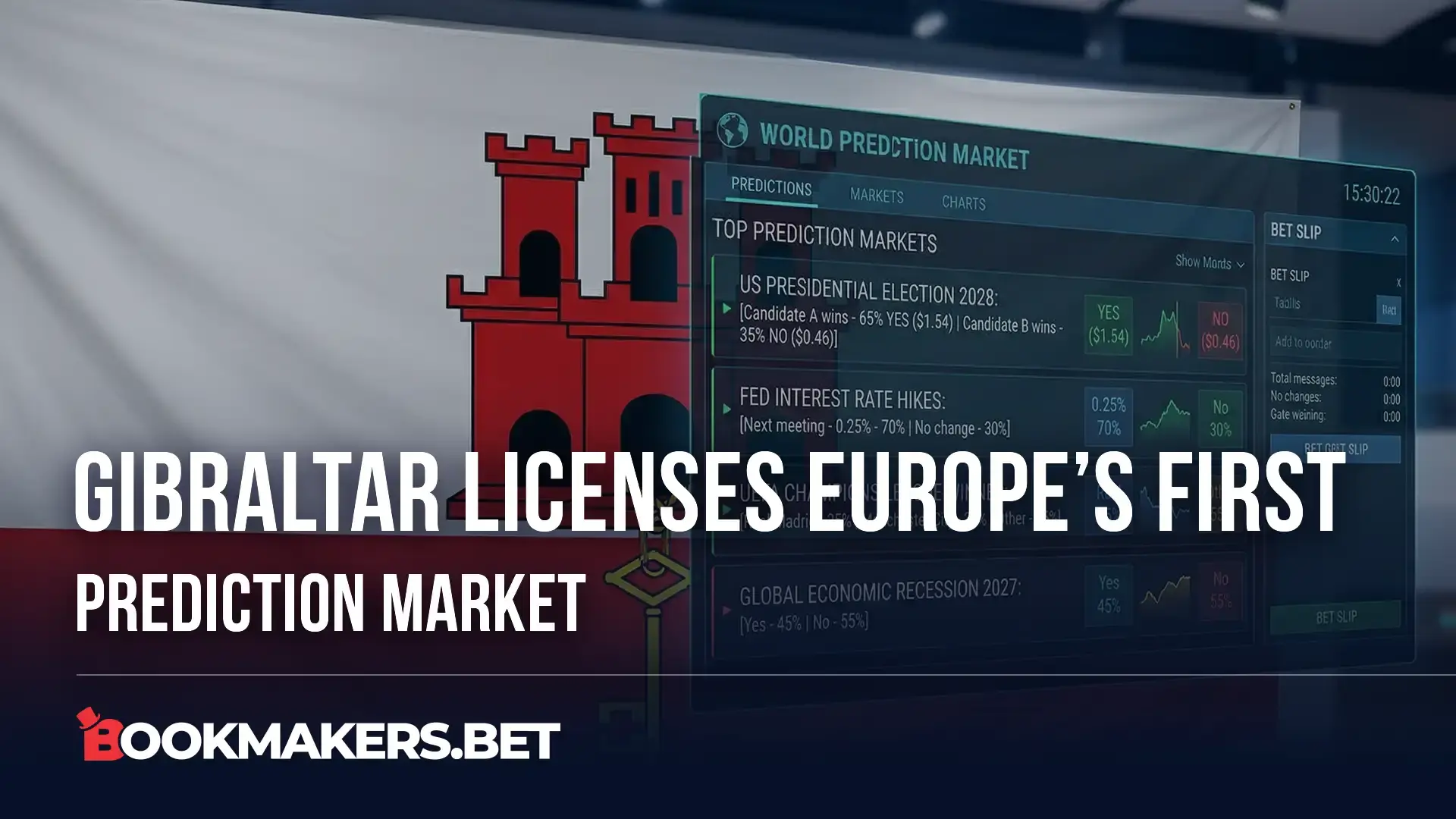
Gibraltar Licenses Europe’s First Prediction Market
Apr 10, 2026
Updated on: Jun 16, 2026
- The country issued its first prediction market license.
- France and Germany are still blocking prediction platforms.
- The UK is open to prediction platforms as long as they are subject to tax.

A Bit About Giannis
I am a content and iGaming specialist with almost three decades of experience in online betting and sports media. I have worked across all kinds of mainstream media, sportsbook and casino operators such as bwin and Sportingbet, and digital gaming publications. I have been producing authoritative betting tips, appealing content, and in-depth analyses of markets and odds with a strong focus on sports betting, covering many sports and leagues. My insights help readers make informed betting decisions and navigate the evolving iGaming landscape strategically.

0 Comments
Trending News

UFC partners up with Stake.com
German legislation allowing online gambling nationwide comes into force

Tyson Fury vs Deontay Wilder 3 betting guide

1xBet Announces Biggest Wins for 2023
Betinia iOS App Officially Launched for Swedish Players